


The manufacturing sector continues to evolve as businesses in India adopt smarter, data-driven systems to improve productivity and maintain competitiveness.
For small and mid-sized manufacturing companies, ERP solutions such as SAP Business One have become central to this shift, helping integrate operations, optimise resources and improve visibility across the shop floor.
This article examines the seven key advantages of ERP software for the manufacturing industry, explains how ERP streamlines core functions and outlines why it has become a strategic investment for manufacturers preparing for future growth.
What Makes ERP Essential for Manufacturers?
Manufacturing environments typically involve complex processes, large inventories, multiple stakeholders and strict compliance requirements. Managing all of this manually or through disconnected systems often leads to delays, discrepancies and rising costs.
ERP software brings every function, procurement, production, quality control, finance, inventory, sales and dispatch onto a unified platform.
Below are the seven key advantages that make ERP crucial for manufacturing businesses today.
1. Centralised Data for Better Visibility and Decision-Making
One of the advantages of ERP software is its ability to unify all critical data, production, inventory, procurement, sales, finance and quality into a single, reliable system.
This eliminates data fragmentation and ensures every department works with real-time information.
Managers can:
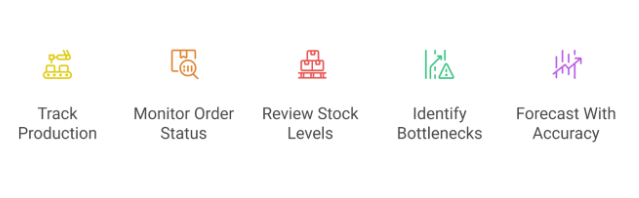
With improved visibility, leadership teams can make faster, data-driven decisions instead of relying on assumptions.
This is especially useful for manufacturers handling multiple product lines or operating across different locations.
2. Improved Production Planning and Resource Utilisation
Manufacturers often struggle with delayed production schedules, machine underutilisation and misaligned labour planning.
ERP addresses these challenges by enabling:
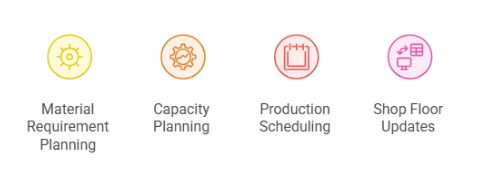
By aligning demand with production capacity, ERP supports smoother workflows and fewer disruptions. Manufacturers can identify resource gaps early and allocate manpower, machinery and materials more efficiently.
This leads to shorter lead times and more predictable production cycles, which are critical for maintaining customer trust.
3. Enhanced Inventory Control and Reduced Stock Costs
Inventory mismanagement can result in:
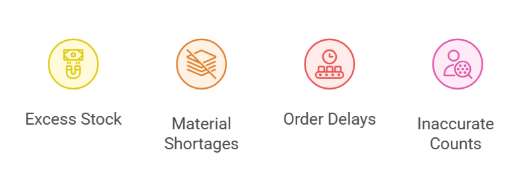
ERP improves inventory visibility and control, helping manufacturers reduce excess stock while avoiding material shortages.
This reduces carrying costs and supports more reliable supply chain management with ERP, improving coordination with suppliers and distributors.
4. Stronger Supply Chain Coordination
An ERP system integrates suppliers, procurement teams, production and logistics within a single framework, improving communication and transparency at every stage.
Key improvements include:

This level of coordination ensures raw materials arrive on time and finished goods are dispatched efficiently. As a result, manufacturers experience fewer production stoppages and stronger supplier relationships.
5. Higher Quality Control and Regulatory Compliance
Manufacturers in sectors such as automotive, electronics, pharmaceuticals and food processing must meet strict quality and compliance standards.
ERP systems support end-to-end quality checks during:
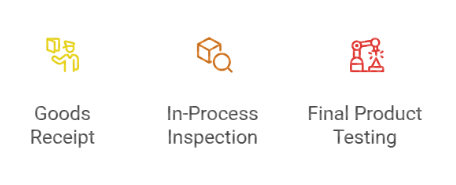
Automated documentation creates reliable audit trails and reduces the risk of errors during compliance reporting.
ERP also helps maintain consistency by enforcing standardised processes across production lines. This results in fewer defects, lower rework costs and improved customer satisfaction.
6. Cost Reduction Across Departments
Implementing ERP often leads to measurable cost savings across manufacturing operations. Some major areas of impact include:
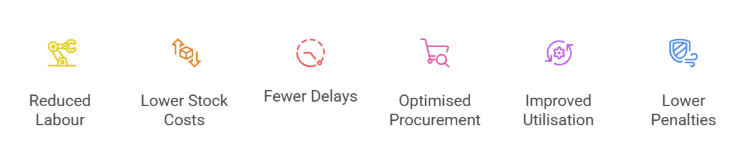
For small and mid-size manufacturers, especially those exploring the best ERP for small manufacturing businesses, this supports stronger financial control and confident scaling.
7. Faster Order Processing and Better Customer Experience
Manufacturing customers expect timely delivery, transparent updates and consistent product quality. ERP supports this by connecting sales, production and dispatch teams within a single system.
With an integrated ERP:

This leads to higher customer satisfaction, fewer disputes and increased repeat business. Automated order status updates also improve transparency and trust.
Why Choosing the Right ERP Matters
While the advantages of ERP systems are significant, results depend heavily on selecting the right implementation partner. An experienced ERP service provider ensures:
- Smooth deployment
- Industry-specific customisation
- Proper user training
- Post-implementation support
This helps manufacturers maximise the value of their ERP investment while minimising operational disruptions.
How We Help You Implement ERP Successfully
Choosing the right ERP is only the first step. Successful implementation determines how quickly a business begins to see real value.
As an award-winning SAP Business One partner, we support small and mid-sized manufacturers at every stage of their ERP journey.
| Aspect | Key Features |
|---|---|
| Process-Focused Consultation | Identifies gaps across production, procurement, inventory and finance to design an efficient ERP blueprint. |
| Tailored SAP Business One Setup | Custom configuration aligned with industry-specific workflows and manufacturing requirements. |
| Seamless Data Migration & System Configuration | Ensures accurate, clean and complete data transition into SAP Business One from day one. |
| Hands-On User Training | Helps teams adopt the system confidently through guided sessions and practical use-case training. |
| Post-Implementation Support | Continuous optimisation and timely assistance as operations grow and evolve. |
We combine deep manufacturing expertise with proven SAP Business One delivery models to help companies scale operations, strengthen control and build a digital-ready foundation for growth.
Conclusion
ERP software has become a vital tool for manufacturers aiming to modernise operations, reduce manual effort and gain a competitive edge. From improved planning and quality control to real-time visibility and better customer service, the advantages of ERP software are clear and measurable.
As the manufacturing landscape becomes increasingly digital and fast-paced, businesses that adopt ERP systems early are better positioned to scale, innovate and respond to evolving market demands.
Reach out today, and our experts will guide you through every step of your ERP journey.